

Who can use this Representation Agreement?
A manufacturer or company that wants to outsource marketing of its products in an overseas country to a sales agent or representative based in the country.
What is this Representation Agreement for?
This representation agreement creates an arrangement between a manufacturer or supplier and a sales representative in another country. Unlike a commission agreement, the company making the appointment is more of an employer or joint-venture partner. It will provide funding for the representative and, at the end of each year, the representative will get a share of profits based on the sales that are generated.
What are the main issues for this type of agreement?
Role of representative. What are their precise duties? These are likely to vary depending on the nature of the business
Fee arrangements. As this is not a simple commission arrangement, the representative is likely to receive a living allowance and expenses and then share in profits.
Non—competition. The company making the appointment will want to prevent the representative from working for direct competitors both during the agreement and for a time after it ends.
What detailed terms does the Representation Agreement contain?
This eight page agreement includes 12 main clauses covering
- definitions
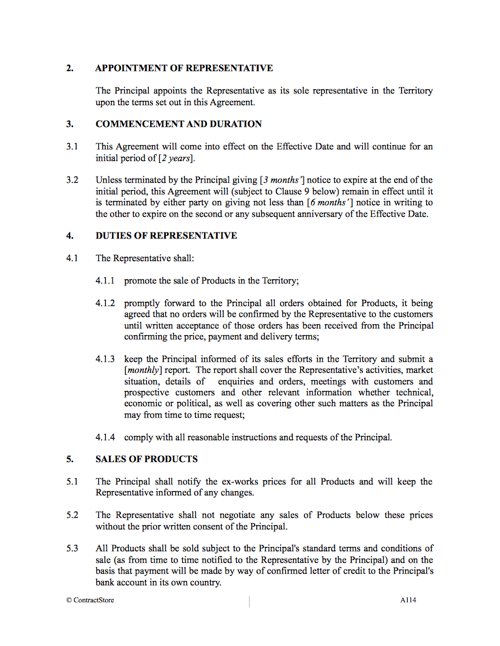
- appointment of representative
- commencement and duration
- duties of representative
- sales of products
- financial arrangements
- duties of principal
- intellectual property rights
- termination
- non-competition
- assignment
- miscellaneous clause addressing notices, the scope of the agreement, waiver, and governing law and disputes.
For more information on each of these sections, see our Explanatory Notes which you will receive when you download the document from our website.
For information on signing documents see our Contract Signing page
When I download the document, can I change it and/or use it more than once?
Yes, all ContractStore’s templates are in MS Word and you can use the contract on more than one project. For more information, watch the video on this page of our website or see our FAQs
Legal support
ContractStore supplies templates and is not a law firm. But all our templates are written by experienced lawyers so we can arrange legal assistance for customers who need special terms in one of our documents or a bespoke template. . For more information see our Legal Services page.
And if you want to contact us see our Contacts page.
If you have any questions about a contract and/or want to see these notes before you buy, please let us know by using our contact form
You may also find these contracts of use:

Agency Agreement Template (Favouring the Agent) (A102)
£79.00What is this agent agreement template for? This agent agreement is suitable for a company (or individual) that wishes to act as sales agent for a manufacturer or supplier. The terms of the agreement are

Appointment of a Consultant Contract Letter Template (Freelance) (A112)
£55.00Who can use this Consultant Appointment? Any company or organisation that wants to engage an independent consultant or freelance individual to provide services. What is a Consultant Appointment Letter for? It sets out the terms